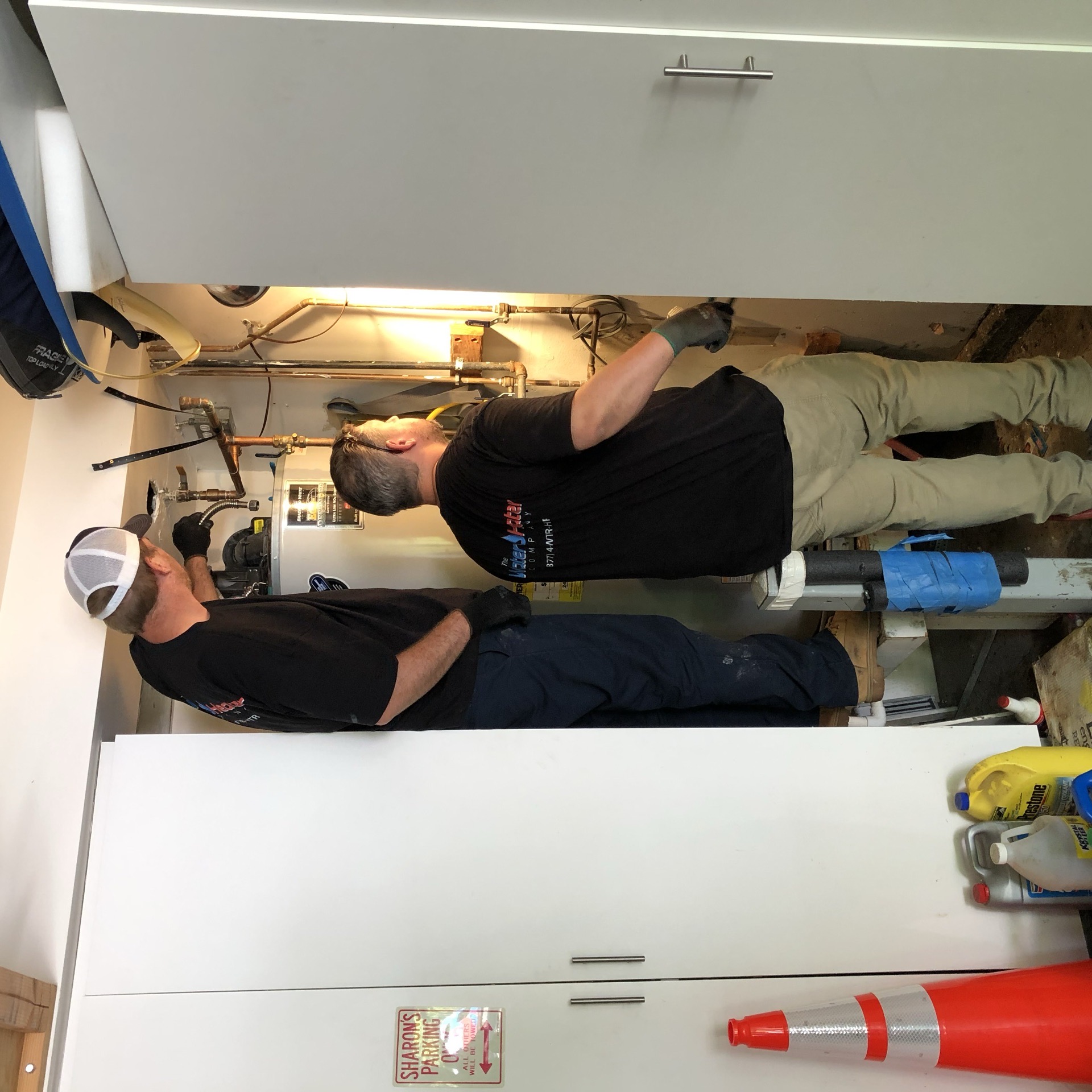
How to Extend the Life of Your Water Heater
A few simple habits can add years to your water heater. Learn about annual flushing, anode rod replacement, temperature and pressure settings, and expansion tanks.
A few simple habits can add years to your water heater. Learn about annual flushing, anode rod replacement, temperature and pressure settings, and expansion tanks.
Extending the life of your water heater means slowing the two things that kill it: corrosion and sediment buildup. A storage tank water heater typically lasts 8 to 12 years, but consistent, low-cost maintenance can push a unit toward the high end of that range — and beyond. Here is what actually moves the needle, in order of impact.
By Anthony Hamilton, Co-Founder, THE Water Heater Company (21+ years in water heaters). Reviewed by THE Water Heater Company's factory-trained technical team.
1. Flush the tank every year
Sediment — the mineral grit left behind by hard water — collects at the bottom of the tank. It insulates the burner from the water, forces the unit to run hotter and longer, and accelerates corrosion of the tank floor. Draining and flushing the tank once a year clears that grit out. In hard-water Southern California, this is the single most valuable habit you can build. We cover the details in our guide to water heater flushing frequency.
2. Replace the anode rod before it is gone
The anode rod is a sacrificial metal rod that corrodes instead of your steel tank. Once it is fully consumed — often within 3 to 5 years on hard water — rust turns on the tank itself. Inspecting the rod and swapping it on schedule is the most direct way to add years of life. A powered anode rod uses an electrical current instead of sacrificing metal, lasts far longer, and is an excellent upgrade for homes with aggressive water.
3. Dial in the temperature
Running the thermostat too hot wastes energy, raises scalding risk, and speeds up mineral scaling inside the tank. A setting around 120°F is the sweet spot for most households — hot enough for comfort and sanitation, gentle enough to reduce wear and energy use. Turning it down from 140°F to 120°F is a free way to ease the load on your unit.
4. Control your water pressure and add an expansion tank
High household water pressure stresses the tank, fittings, and the temperature-and-pressure relief valve. When water heats and expands in a closed plumbing system, that pressure has nowhere to go — unless you install an expansion tank. An expansion tank absorbs the surge, protecting your heater and your plumbing. Pairing it with a pressure-reducing valve when incoming pressure is too high gives your heater an even easier life.
When this matters most
Maintenance pays off the most in the first several years — before sediment has hardened and before the anode is gone. If your unit is brand new, start the annual rhythm now. If it is already 5 to 8 years old, catching up on a flush and an anode inspection can still buy meaningful time. To understand the full timeline, read the complete guide to water heater lifespan, and if your unit is older, see how old is too old for a water heater.
Proof you can trust
THE Water Heater Company is a residential water-heater-only specialist founded by Anthony Hamilton and Gonzalo Albarellos, with 42 years of combined experience, a 4.9-star rating across 2,100+ reviews, and CA Contractor License #1045699. We are factory-trained on Bradford White, Noritz, Navien, and Rinnai and maintain units throughout Ventura, Los Angeles, and Orange County — some of the hardest-water territory in the state.
Want a professional maintenance visit? THE Water Heater Company offers same-day service, 7 days a week, 7:00 AM–8:30 PM. Call (877) 798-7487 or book online and we'll bring the heat.
Keep Reading
Related Articles

Ready for hot water?
Ready to Get Started?
Whether you need a repair, maintenance, or new installation — our experts are here to help.