How a Seismic Valve Prevents Gas Leaks After a Quake
How a seismic gas shutoff valve senses motion and seals your gas line, and why post-earthquake gas leaks are a real danger in California.
How a seismic gas shutoff valve senses motion and seals your gas line, and why post-earthquake gas leaks are a real danger in California.
After a major earthquake, one of the most serious hidden dangers in a home is not the shaking itself but what comes next: a natural gas leak. A seismic gas shutoff valve is engineered to stop that leak automatically by sealing the gas line the moment strong motion is detected. Here is how the valve actually works and why this protection matters so much in California.
By Anthony Hamilton, Co-Founder, THE Water Heater Company (21+ years in water heaters). Reviewed by THE Water Heater Company's factory-trained technical team.
Definition: how a seismic valve senses motion
Inside a typical seismic valve is a precision-balanced steel ball or pendulum resting on a seat. During normal life — footsteps, passing trucks, minor tremors — the ball stays put and gas flows freely. When ground acceleration crosses the valve's calibrated threshold (designed to correspond to a damaging earthquake), the ball is knocked off its seat and drops into the gas channel, mechanically blocking the flow. No electricity, sensors, or batteries are involved; it is pure physics, which is exactly why it keeps working when the power goes out. Learn more on our earthquake valve hub.
When it matters: the post-quake window
The danger period begins the instant shaking stops. Gas lines, fittings, and appliance connectors are often stressed or torn during a quake, and any leak can persist silently for hours. A seismic valve acts during the shaking itself, closing the line before a leak has a chance to accumulate.
Failure mode: why post-quake gas leaks are so dangerous
Natural gas leaking into an enclosed home is both a fire and an explosion hazard. After a strong earthquake, several things tend to go wrong at once: appliances shift and rupture their connectors, rigid pipes crack at joints, and — critically — an unsecured water heater can topple over and shear off its own gas and water lines. Downed power lines, broken glass, and sparks provide ignition. This combination is why gas-fed fires are a recurring story after California quakes.
The water heater connection
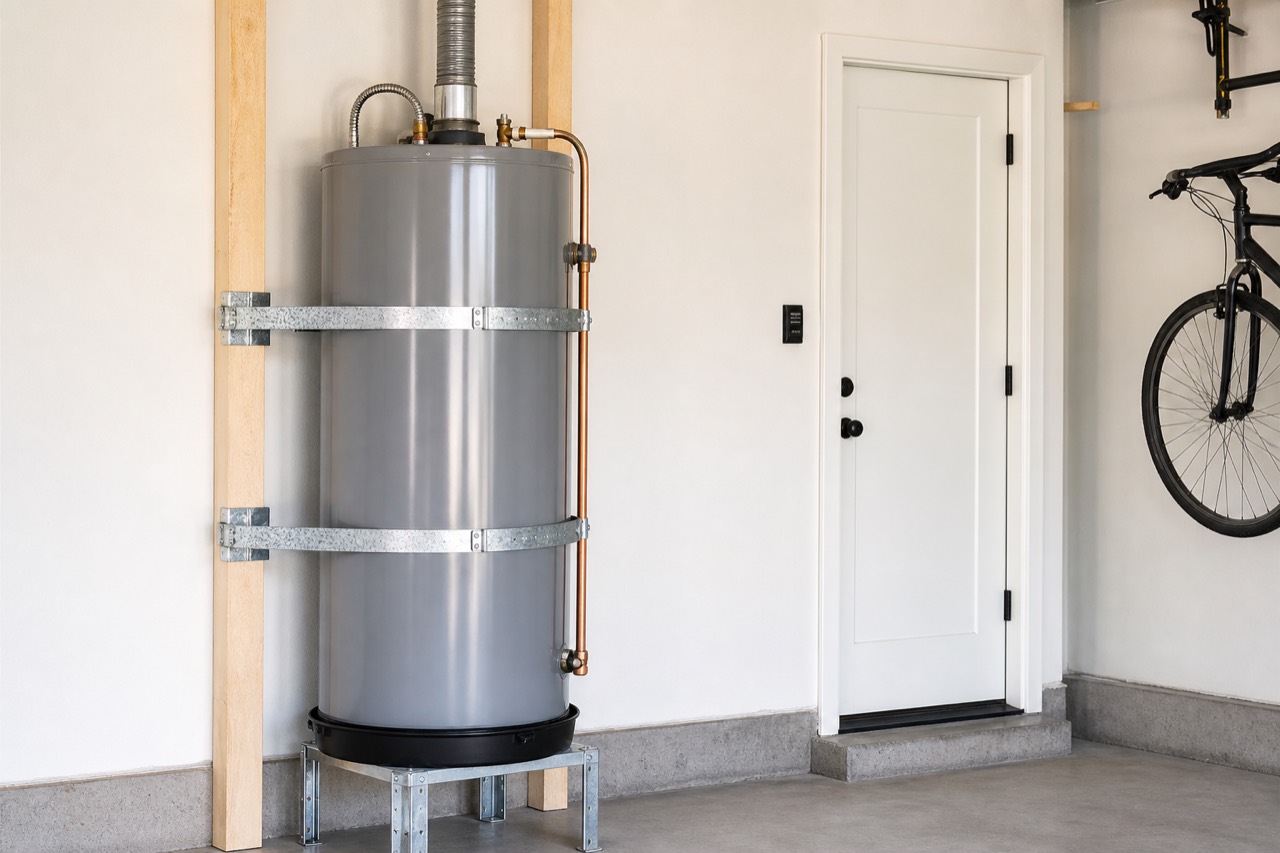
A water heater is one of the heaviest, tallest gas appliances in most homes, which makes it a prime candidate to tip during a quake and tear its connections. That is why securing the tank is the natural companion to a seismic valve. See how to secure your water heater for earthquakes in 4 easy steps, and if your unit is old or already failing, our water heater page covers replacement.
Proof: a layered defense
No single device makes a home earthquake-proof, but a correctly installed seismic valve removes one of the most lethal links in the chain — uncontrolled gas flow. THE Water Heater Company is a licensed, insured water-heater specialist (CA Contractor License #1045699) with 42 years of combined experience installing and servicing gas appliances across Ventura, Los Angeles, and Orange counties. We install valves at the correct location and orientation and verify them with a pressure test.
Action: close the gap before the next quake
Understand the full benefit set in the definitive guide to earthquake valve benefits, see the installation process in how to master earthquake valve installation, and build a complete plan with our earthquake preparedness tips for California homeowners.
THE Water Heater Company offers same-day service, 7 days a week, from 7:00 AM to 8:30 PM. Call (877) 798-7487 or book online to protect your home before the next earthquake.
Keep Reading
Related Articles
Ready for hot water?
Ready to Get Started?
Whether you need a repair, maintenance, or new installation — our experts are here to help.